


From the very first wobbly steps to that proud moment your child kicks a ball across the yard, you are watching gross motor skills in action. They are the big, whole-body movements that carry your child through their day, and they quietly shape almost everything: confidence, independence, learning and play.
If you have ever wondered what gross motor skills actually are, why they matter so much, and how you can help your child build them, this guide is for you.
What are gross motor skills?
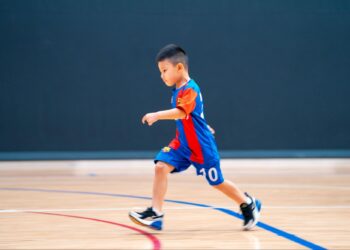
Gross motor skills are the movements that use the large muscles of the body: the arms, legs and torso. They power the big actions like crawling, walking, running, jumping, climbing, throwing and kicking, as well as trickier coordination skills like skipping, balancing and catching a ball.
In short, gross motor skills are how children move through and explore the world.
And what about fine motor skills?
You will often hear “gross motor” and “fine motor” mentioned together, so here is the quick difference.
Fine motor skills use the small muscles in the hands, wrists and fingers. They are the skills behind holding a pencil, doing up buttons, using scissors and tying shoelaces.
Here is the part that surprises many parents: gross motor skills come first and lay the foundation for fine motor skills. A child needs a strong, stable core and good posture before their hands can do careful, precise work. Big muscle control supports the small stuff.
The three types of gross motor movement
Gross motor skills fall into three handy groups. Once you notice them, you will spot them everywhere.
- Locomotion, which simply means getting from one place to another: rolling, crawling, walking, running, climbing, leaping, jumping and hopping.
- Stationary skills, which are movements in one spot: head control, sitting balance, standing on one leg, bending, stretching, pushing, pulling, swaying and twisting.
- Manipulation, which means moving objects: rolling, throwing, catching, kicking, stopping or batting a ball.
Soccer, as it happens, is a lovely mix of all three, but more on that later.
Why are gross motor skills so important?
Gross motor skills do far more than help kids run around. They support a child’s development in three big ways.
Physical growth and body control. Strong muscles and bones help kids sit, stand and run. Good coordination lets them manage big movements like jumping, skipping and catching. And building endurance gives them the energy to stay active all day without tiring out too quickly.
Independence and daily life. These skills help children dress themselves, climb in and out of bed and move safely around their environment without falling. That growing independence is a huge confidence boost.
Learning and social skills. A strong core helps children sit upright at a desk to read and write. That same big muscle control supports the fine motor skills needed to hold a pencil. And crucially, good gross motor skills let kids join in games, keep up with their friends and feel like they belong on the playground. It is closely tied to the way movement supports learning and concentration.
That last point matters more than we sometimes realise. When a child can confidently run, jump and play alongside their peers, they build friendships and self-esteem right along with their muscles.
How gross motor skills develop for kids, stage by stage
Every child develops at their own pace, so treat the developmental milestones below as a general guide rather than a checklist. Babies build skills from the head down, gaining head and trunk control before they master their legs and feet, and each new skill builds on the last. Rolling leads to crawling, and crawling leads to walking.
- Infancy (birth to 12 months). Little ones start by holding their head up, then rolling over, sitting, and crawling. By around a year, many are pulling up to stand and cruising along the furniture.
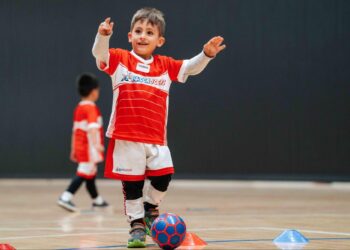
- Toddlerhood (1 to 3 years). Walking becomes running. Toddlers learn to climb, kick a ball forward, walk up and down stairs, and jump with both feet off the ground. Soccajoeys offers Minis soccer for children from 2.5 years.
- Preschool (3 to 5 years). Movement gets more adventurous. Preschoolers balance on one foot, catch a large ball, jump forward (around 25 to 60cm), ride a tricycle, hop, and start to have a go at somersaults. Our Preschool program is built for exactly this stage.
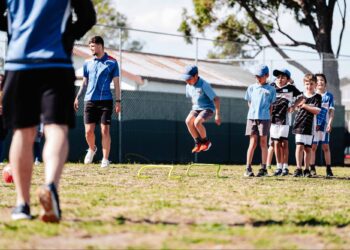
- School age (5 years and up). Now the coordination really shines. Kids skip on alternate feet, jump rope, ride a bike with or without training wheels, climb well, and start to skate and swim. These are the skills that set them up for organised sport.
We offer kids soccer programs to help build up skills for children in this age range:
A quick note on activity: children aged around six and up benefit from at least 60 minutes of moderate to vigorous movement a day, and that can be split into shorter bursts. Toddlers and preschoolers do best with even more, spread through the day in a mix of structured and free play, in line with Australia’s 24-hour movement guidelines.
Signs your child might need a little extra support
Because every child grows at their own rate, the occasional wobble is completely normal. But there are some signs worth keeping an eye on, especially if they persist or your child is noticeably behind their peers:
- Frequent falls or ongoing trouble with balance
- Difficulty with basic skills like jumping, hopping or running
- Tiring very quickly during active play
- Poor posture, or constant slumping and shifting in a seat
- Struggling to climb or navigate playground equipment
- Reaching milestones like crawling and walking well after other children the same age
- Becoming reluctant to join in physical activities out of frustration or fatigue
If any of these ring true, please do not worry or wait it out alone. The best next step is to speak with your GP, a paediatric physiotherapist or an occupational therapist. This is especially important where a learning difficulty or disability is involved, because these professionals can properly assess your child and provide targeted, tailored support that a general sports program simply is not designed to give. Early support makes a real difference, and asking for it is one of the most caring things a parent can do.
Simple ways to build gross motor skills at home
The good news is that developing these skills does not require anything fancy. Play is the work of childhood, and everyday movement is exactly what growing bodies need. Try:
- Outdoor play and games like tag, hopscotch, running races and playground time.
- Obstacle courses built from cushions, blankets and household bits, or a trip to an adventure park for climbing and jumping.
- Dance and movement games such as Simon Says, Twister, kids’ yoga or a living room dance party for rhythm and coordination.
- Bikes and scooters to build balance, strength and confidence.
- Swimming and water play, which strengthen the core and get both sides of the body working together.
- Ball games like rolling, throwing, catching and kicking to develop hand, eye and foot coordination.
The best activity is the one your child actually enjoys, because the more they want to do it, the more they practise without even noticing.
Where soccer fits in
Once children reach preschool and school age, organised sport becomes a wonderful way to bring all these skills together in one fun package.
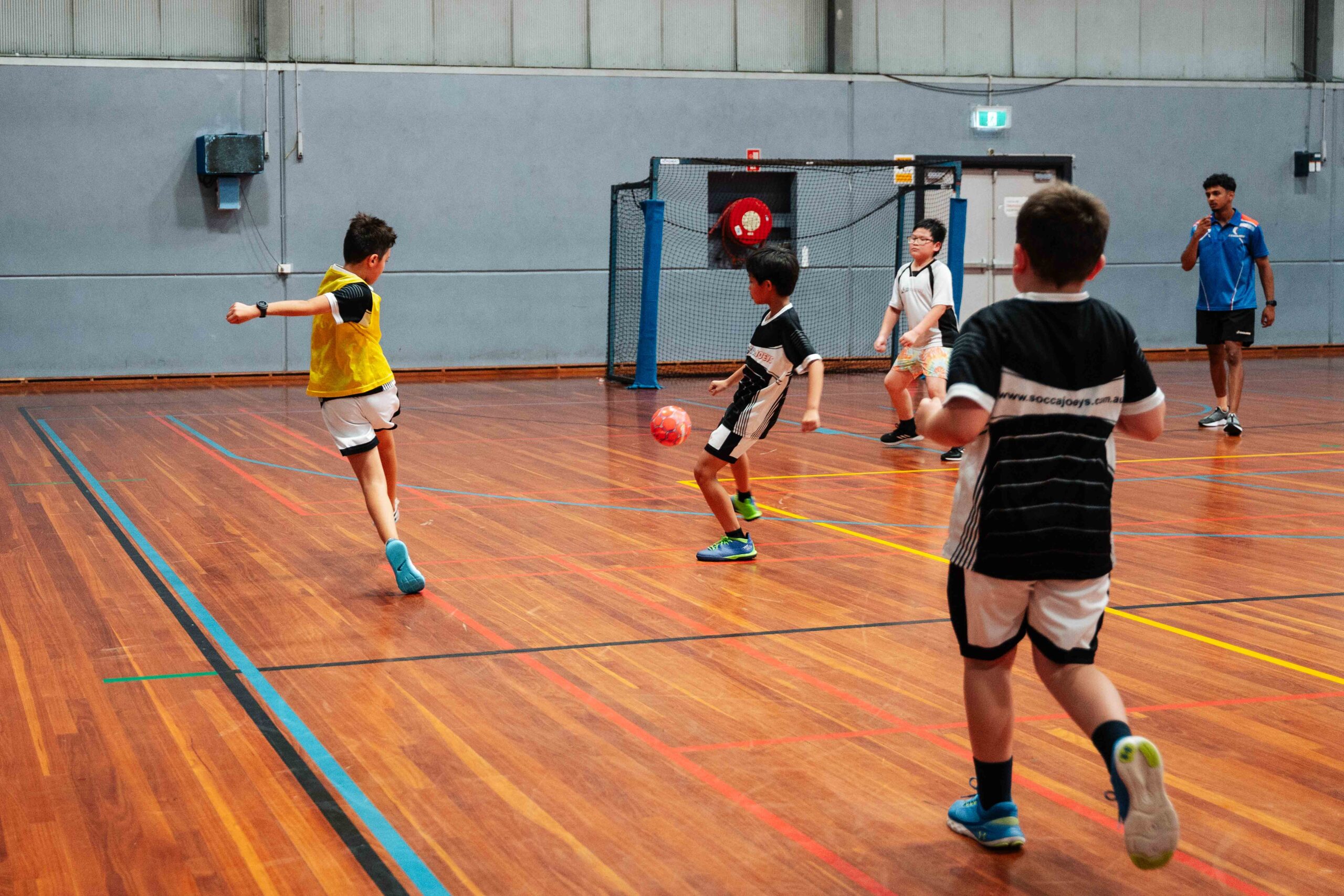
Soccer is a natural fit because it weaves in all three types of gross motor movement at once: the running and dodging (locomotion), the balancing and turning (stationary skills), and all that kicking, trapping and dribbling (manipulation). Add in the teamwork and friendships, and it becomes a place where kids build their bodies and their confidence side by side.
At Soccajoeys, we work with children from around toddler age to age 11, meeting them at whatever stage they are at and helping them develop coordination, balance, strength and body awareness through play they genuinely look forward to. It is one of the many benefits of playing soccer for kids.
Kids soccer programs like ours are not a replacement for therapy where a child has genuine developmental delays, but for many kids they are a joyful way to strengthen gross motor skills and build a lasting love of being active.
The takeaway
Gross motor skills are the foundation your child builds almost everything else on, from writing at a desk to making friends on the field. They develop naturally through movement and play, at each child’s own pace, with plenty of encouragement from you.
Keep it fun, celebrate the little wins, and if something feels off, trust your instincts and check in with a professional. And when your child is ready to run, kick and laugh their way to stronger skills, we would love to help them discover just how good it feels to move.