


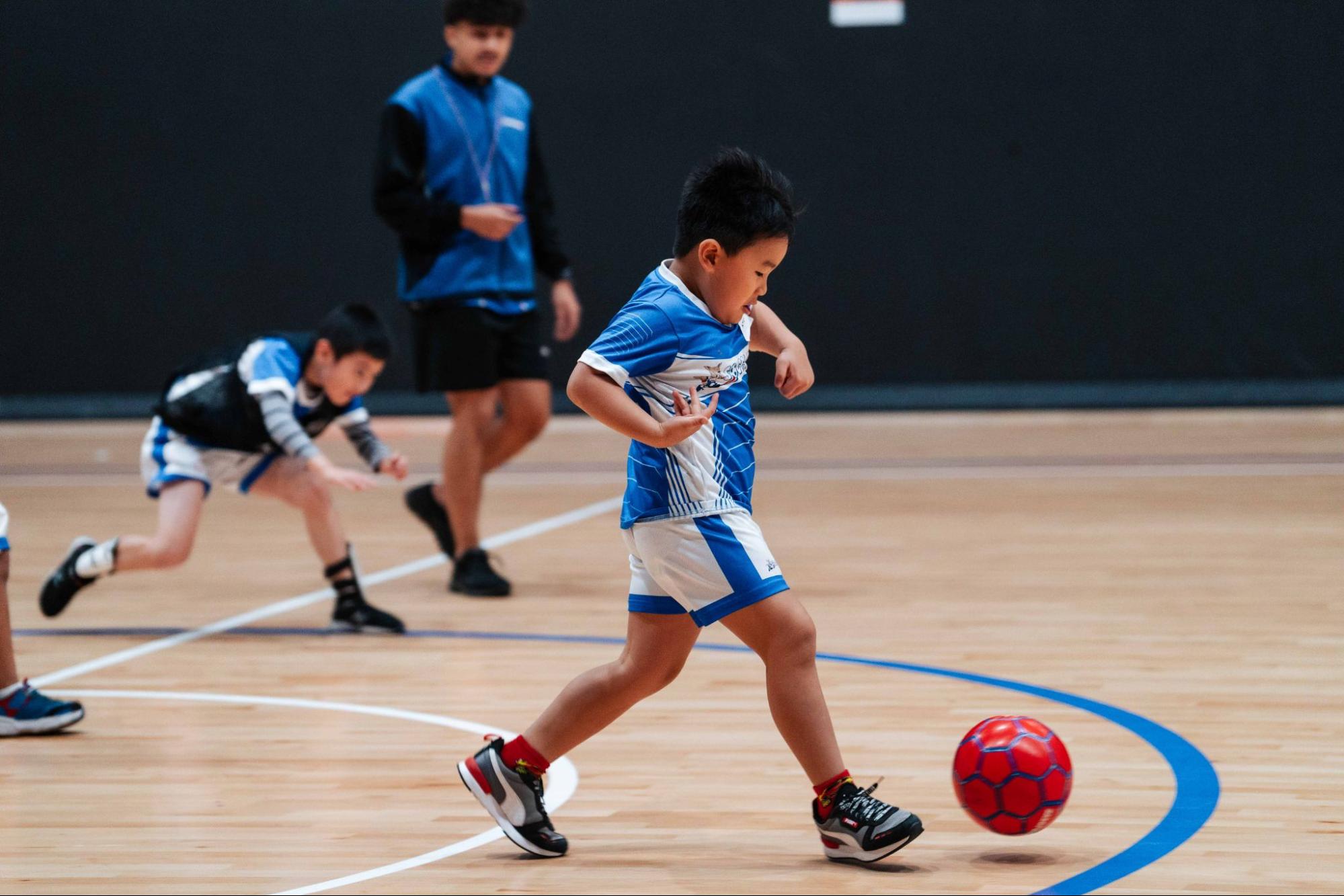
What is futsal?
Futsal is five-a-side football played on a hard indoor court, with a smaller, heavier ball and nonstop action from whistle to whistle. Think of it as soccer with the dial cranked all the way up: more touches, more shots, more goals, more fun.
Here’s the quick futsal definition: futsal is a FIFA-recognised version of football played between two teams of five (four outfield players and a goalkeeper) on a court roughly the size of a basketball court, using a size-4 low-bounce ball. The name comes from the Spanish and Portuguese words for “hall football” or “room football” – fútbol de salón and futebol de salão.
If you’ve ever watched a kid light up the moment a ball lands at their feet, you already get why we love futsal at Soccajoeys. It’s built for exactly that feeling: every player gets the ball, every player gets involved, and every player gets better, fast.
Where did futsal originate?
Futsal was born in Montevideo, Uruguay, in 1930. A PE teacher at the local YMCA, Juan Carlos Ceriani, wanted a version of football young people could play indoors, all year round, on basketball-sized courts.
The timing was perfect. Uruguay had just hosted and won the very first FIFA World Cup, and the whole country was football crazy. Ceriani borrowed ideas from basketball, handball and water polo to shape the rules, and the game spread like wildfire across South America.
Brazil took it and ran. Some of the greatest players of all time, including Pelé, Ronaldinho and Neymar, sharpened their silky skills on futsal courts as kids. Today FIFA runs a Futsal World Cup, and the game is played in more than 100 countries.
The lesson? The world’s best footballers got their magic from small spaces and lots of touches. That’s exactly the idea behind Soccajoeys’ indoor classes.
What is futsal in Australia?
In Australia, futsal is the official indoor format of football, run by Football Australia and the state federations under FIFA’s Futsal Laws of the Game. It’s not a backyard knock-off. It’s a proper, recognised sport with its own leagues, championships and national team.
Our men’s national side even has the best nickname in world sport: the Futsalroos. Australia has played at seven FIFA Futsal World Cups, and states run elite competitions like the F-League in NSW and WA.
But the real heartbeat of Aussie futsal is the local stuff: weeknight social comps, school gyms buzzing on a Saturday morning, and kids discovering how much fun it is to have the ball at their feet again and again. With our scorching summers and wet winters, an indoor game that’s on rain, hail or shine just makes sense down under.
Is futsal the same as soccer?
Yes and no: futsal is an official, FIFA-recognised form of soccer, but it’s played with fewer players, a different ball and its own rules. Same goal (literally: get the ball in the net), same core skills, but a totally different feel. Here’s how futsal vs soccer stacks up:
Futsal vs soccer: the key differences
| Feature | Futsal | Outdoor soccer |
|---|---|---|
| Players per team | 5 (4 + goalkeeper) | 11 (10 + goalkeeper) |
| Playing surface | Hard indoor court | Grass or turf field |
| Pitch size | About 40 m × 20 m | About 100 m × 64 m |
| Ball | Size 4, heavier, low bounce | Size 5, standard bounce |
| Match length (senior) | 2 × 20 min, clock stops | 2 × 45 min, running clock |
| Substitutions | Unlimited, rolling, on the fly | Limited |
| Ball out on the sideline | Kick-in | Throw-in |
| Offside | None | Yes |
| Weather | Rain, hail or shine | At the mercy of the sky |
The big takeaway? Futsal squeezes all the best bits of soccer into a smaller space, so players touch the ball far more often and have to think and act faster. Juniors play shorter halves to suit their age.
Is futsal faster than soccer?
Yes, by a mile. Futsal is faster than soccer because everything about it is designed to keep the ball moving and the players thinking.
- Tiny space, big pressure. With ten players on a court the size of a basketball court, there’s an opponent closing you down almost every second. Decisions happen in a flash.
- The ball never stops. Clever rules keep it alive: kick-ins instead of throw-ins, a four-second limit on restarts, and a goalie who must get rid of it quickly.
- Rolling subs. Fresh legs come on constantly, so the tempo never drops.
- Low-bounce ball. It sticks to the floor and to your feet, which means quicker passing and fewer wild bounces to chase.
- Goals, goals, goals. Shots fly in from everywhere, and big scorelines are common.
For kids, that speed is pure gold. More touches means more learning, and more action means nobody’s standing around picking daisies at the back.
How many players do you need to play futsal?
You need five players per side to play futsal: four on court plus a goalkeeper. Most teams carry a squad of up to 9 to 14 players (depending on the competition) so they can rotate with rolling subs. Just having a social kick with mates? Five-a-side with a couple of spares is perfect.
What are the rules of futsal in Australia?
The rules of futsal in Australia follow FIFA’s Futsal Laws of the Game, with local comps sometimes tweaking things like match length for juniors. The essentials:
- Kick-off and restarts: Restarts must be taken within four seconds, or possession flips to the other team.
- Kick-ins, not throw-ins: When the ball crosses the sideline, it’s kicked back in from the line.
- Goal clearance: When the ball goes over the goal line off an attacker, the keeper restarts by throwing it.
- Goalkeeper’s four seconds: A keeper can only control the ball in their own half for four seconds.
- No offside: Attackers can lurk anywhere. Sneaky!
- No slide tackles: Sliding in on an opponent is a foul, which keeps the game safer and more skilful.
- Accumulated fouls: From a team’s sixth foul in a half, the other side gets a direct free kick from 10 m with no wall.
- Rolling subs: Swap players in and out as often as you like, through your team’s substitution zone.
- Time-outs: Each team gets one one-minute time-out per half in most competitions.
Always check your local competition’s rules before game day, as small details vary between associations.
Why do people love futsal?
People love futsal because it’s fast, fun, and everyone gets the ball. Here’s what keeps players hooked:
- Endless touches. Studies of youth futsal have found players touch the ball far more often than in an outdoor game of the same length. More touches, faster progress.
- Skills that shine. Close control, quick feet, sharp passing and clever turns get rewarded every minute.
- Nowhere to hide (in a good way). With only five on court, everyone attacks, everyone defends, and everyone matters.
- All-weather fun. No cancelled games, no muddy boots, no freezing sidelines.
- Easy to start. All you need is a ball, a court and a few mates.
- Social vibes. Small teams build tight friendships, fast.
Sound familiar? Those are the same things parents tell us they love about Soccajoeys: every child involved, every child moving, and every child leaving with a grin.
What ages is futsal suitable for?
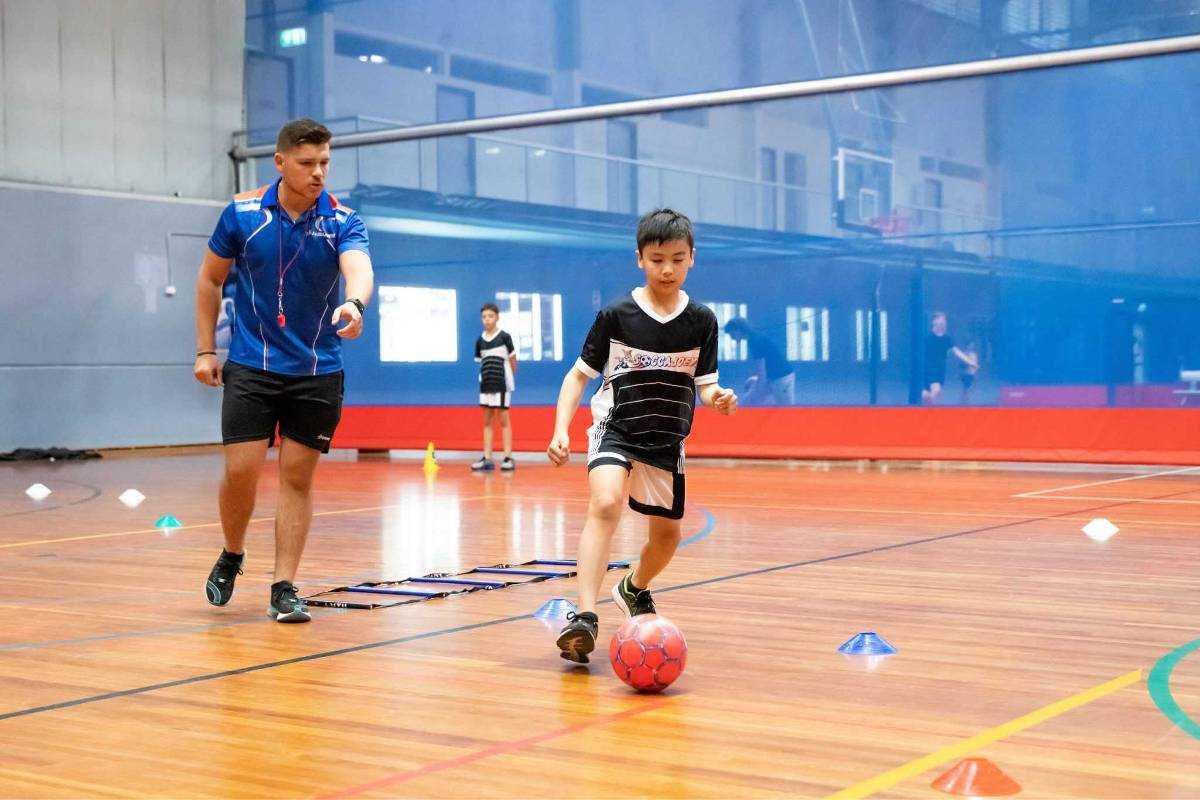
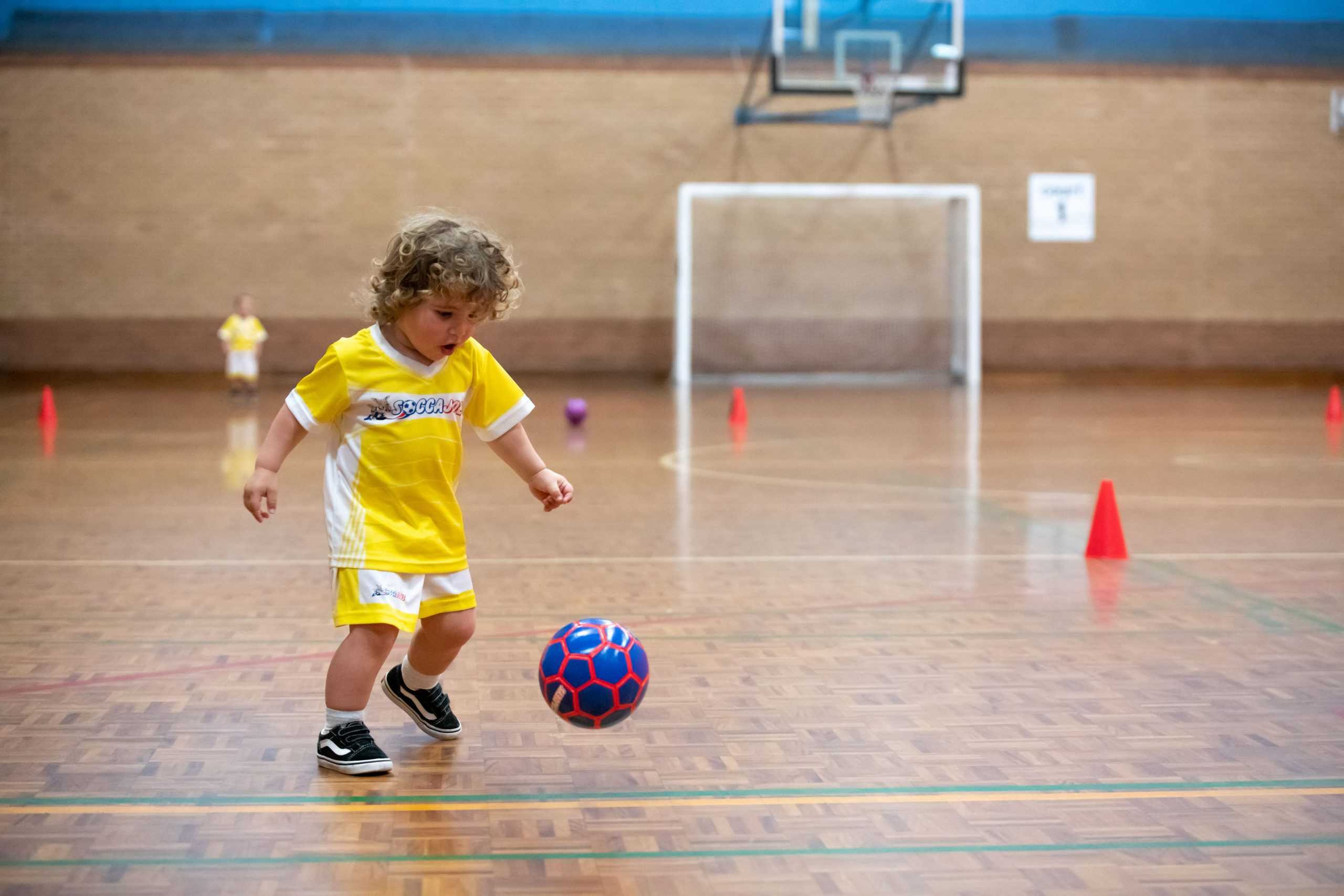
Futsal is suitable for almost every age, from toddlers taking their first wobbly kicks to grown-ups in Tuesday-night social comps. For kids, it might just be the best way to learn football there is.
Why is futsal for kids such a winner?
- The ball behaves. A low-bounce ball is easier for little legs to control, so kids feel successful sooner.
- Small spaces, big brains. Tight courts teach awareness, quick decisions and teamwork.
- Confidence boost. Lots of touches means lots of little wins, and lots of little wins means a confident kid.
- Safe and supervised. Indoor courts, no slide tackles and a contained space give parents peace of mind.
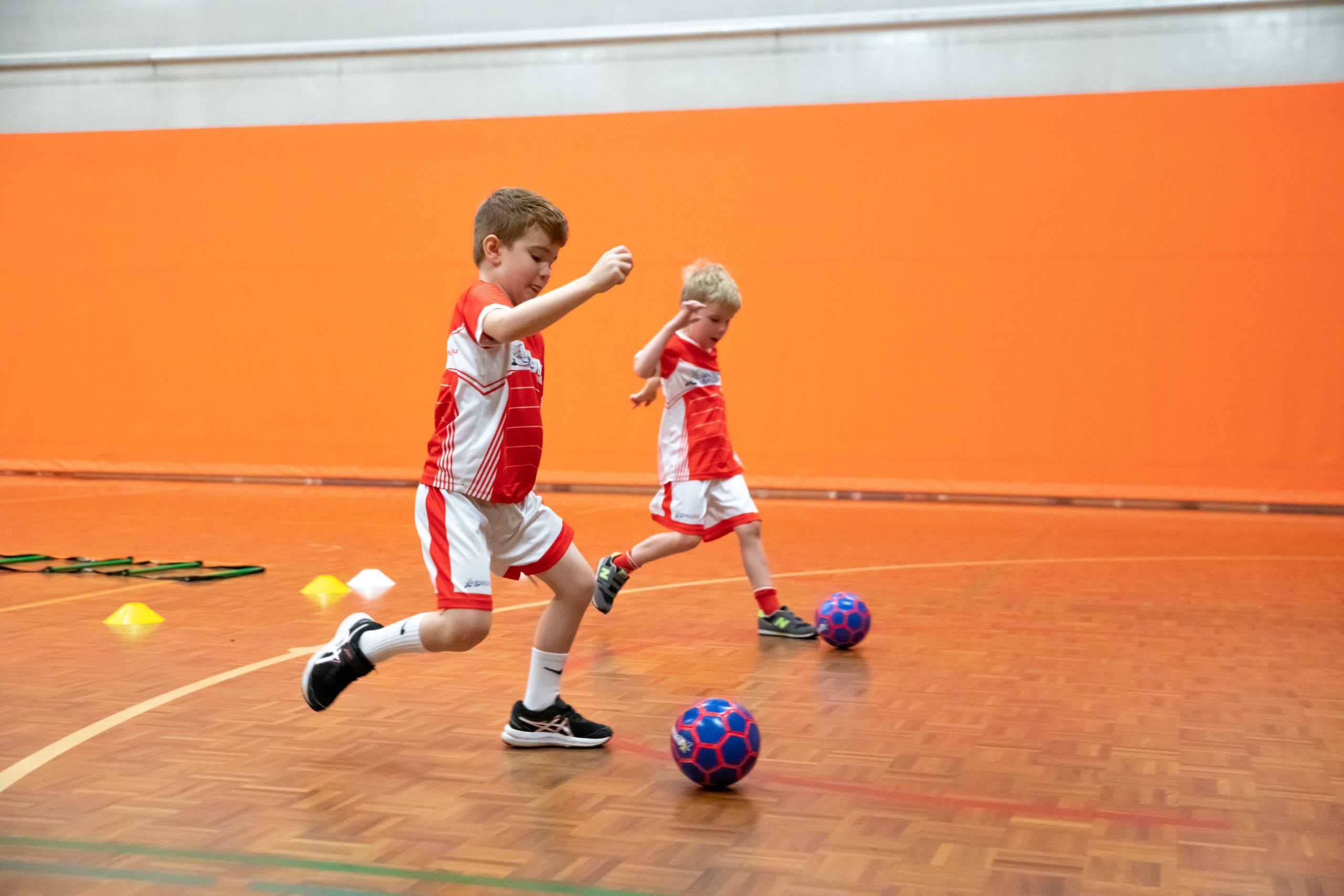
That’s the same small-sided, indoor, ball-at-every-foot thinking that drives Soccajoeys. Our non-competitive programs grow with your child:
| Program | Ages | What kids get |
|---|---|---|
| Minis | 2.5 to 3 years | First kicks, balance, coordination and fun |
| Preschool | 3 to 5 years | 1-hour indoor classes building physical, cognitive and social skills |
| Junior | 6 to 8 years | Sharper ball skills, teamwork and game sense |
| Premier | 9 to 11 years | A challenging setting to level up skills |
Kids who learn close control, quick feet and confident decision-making with us are perfectly set up to jump into futsal, outdoor soccer, or both. Over 1,000,000 children have already grown through Soccajoeys, and all kids are welcome, even if they’ve never kicked a ball before.
How do I find futsal places near me?
The easiest way to find futsal places near you is to check your state football federation’s website, your local leisure centre, or indoor sports venues in your suburb. Many run junior and social comps most days of the week.
Got a little one who’s not quite ready for a competition yet? That’s where we come in. Soccajoeys runs fun, non-competitive indoor soccer classes across NSW, VIC, QLD, SA, WA, the ACT and the NT, from Sydney and Melbourne to Brisbane, Adelaide, Perth, Canberra and Darwin.
It’s the perfect launchpad: your child builds the quick feet, ball control and confidence futsal loves, in a supportive space with accredited coaches who get to know every kid.
Ready to get your little legend kicking?
Find a class near you or call 1300 781 735
NSW families with kids aged 4.5 and up may also be able to use an Active Kids voucher toward registration.
Futsal FAQ: the quick-fire round
- What is futsal?
- A fast, five-a-side, indoor version of football played on a hard court with a smaller, low-bounce ball.
- Where did futsal originate?
- Montevideo, Uruguay, in 1930.
- Is futsal faster than soccer?
- Absolutely. Less space, rolling subs and quick restarts make it far more frantic.
- How many players do you need to play futsal?
- Five per team on court, including the goalkeeper.
- What ages is futsal suitable for?
- Pretty much all of them. Kids can start with fun, skills-based indoor play from as young as 2.5 at Soccajoeys, then move into junior futsal comps as they grow.
- Does futsal help kids get better at soccer?
- Yes! The close control, quick thinking and confidence it builds carry straight onto the grass.